
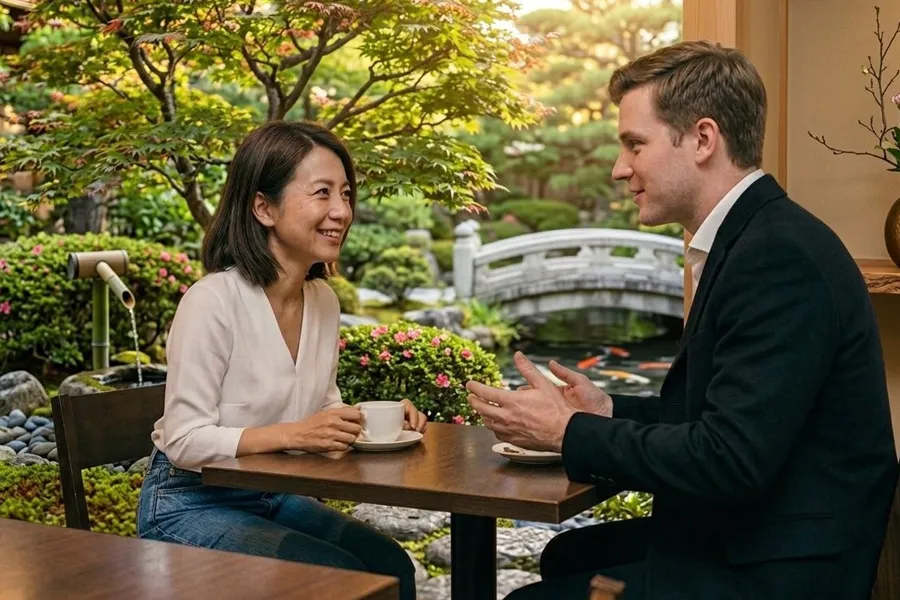
In Japan, communication often values calmness and respect. Hence, personality traits influence relationships. A large number of Japanese women choose soft-spoken men. This preference does not mean weakness. Instead, it shows emotional maturity and cultural awareness
You will be able to establish deeper, more significant connections when you recognize such qualities.


The Japanese culture respects politeness. Shouting or screaming is not very comfortable. Therefore, one feels safe when they listen to a soft-spoken voice.
The major communication characteristics are:
So, people naturally develop trust. Women feel more relaxed around men who communicate responsively.
Soft-spoken men are often seen as emotionally stable. This is an important characteristic in long-term relationships. Thus, calm reactions help avoid unjustified conflict.
Significant attributes that are notable:
Further, emotional stability provides a calm environment. Weaker ties are encouraged in this climate.
In Japan, a heavy-handed approach is not appreciated. Indirectly, people express feelings. The soft personality is therefore suitable for this style.
You can observe the following preferences:
This is why soft-spoken men are more relatable. They are part and parcel of the cultural rhythm.
In Japan, it is more about deeds rather than words. As such, kind-hearted men can be seen taking care through simple gestures. Such acts have long-term effects.
Common examples include:
These mere attempts are kind in nature. As a result, emotional attachment increases.

In any relationship, listening is an important aspect. In Japan, it is more important. Thus, men's attentive listening is exceptional.
Effective listening involves:
During the process of building such meaningful communication, it may be helpful to understand cultural nuances. Transpacific Marriage Agency (TMA) has been introducing Japanese women to Western men since 1994, specializing in dating, romance, love, and marriage. Their extensive experience demonstrates the influence of communication style on relationship success across cultures.
Confidence matters, but humility adds depth. Japanese females tend to value men who remain down to earth. Humble actions, therefore, are more sincere.
Characters, which reveal humility:
As a result, the relationships are more balanced and respectful.
Building a relationship in Japan is a slow process. Fast emotional display might be overwhelming. Thus, patience is appreciated.
Signs of patience include:
Consequently, the relationship is made more secure and significant.
Life may be hectic and stressful. That is why a serene spouse is reassuring. Men who have low voices tend to make the atmosphere quiet.
This presence shows through:
These are attributes that ensure a safe and happy relationship. Emotional awareness, respect, and cold manners are some of the values that Japanese women tend to appreciate. This is instinctively reflected in gentile and soft-spoken men. Thus, they are most likely to establish stronger and more enduring relationships.
You do not have to transform your personality. Rather, learn to be patient, kind, and considerate. These attributes bring about an actual effect.
Transpacific Marriage Agency (TMA) remains committed to helping match Japanese women and Western men in meaningful relationships. TMA brings decades of experience and strives to foster sincere relationships built on respect, understanding, and shared values.
Because calm communication reflects respect, emotional maturity, and creates a safe, comfortable environment for meaningful connections.
It shows patience, attentive listening, and respect, which naturally builds trust and strengthens emotional connection over time.
Emotional stability reduces conflict, creates reassurance, and supports a peaceful, balanced relationship valued in Japanese culture.
By showing care through small actions, being considerate, offering help, and consistently supporting their partner.
Because relationships develop gradually, patience allows trust, comfort, and emotional connection to grow naturally over time